The workshop
How a mantapa is made
A mantapa is a pillared pavilion. These are that pavilion, brought indoors and carved in wood so a home can hold a place of worship.
The word
Mantapa — also written mantap, mantapas, mantapam, or mandapa — names the pillared hall of a temple. On this site it names the smaller work: a rosewood mantapa with a roof, columns, and a clear place for a murti, a picture, or a lamp. Some are open. Some lock. Some are only a seat.
The timber
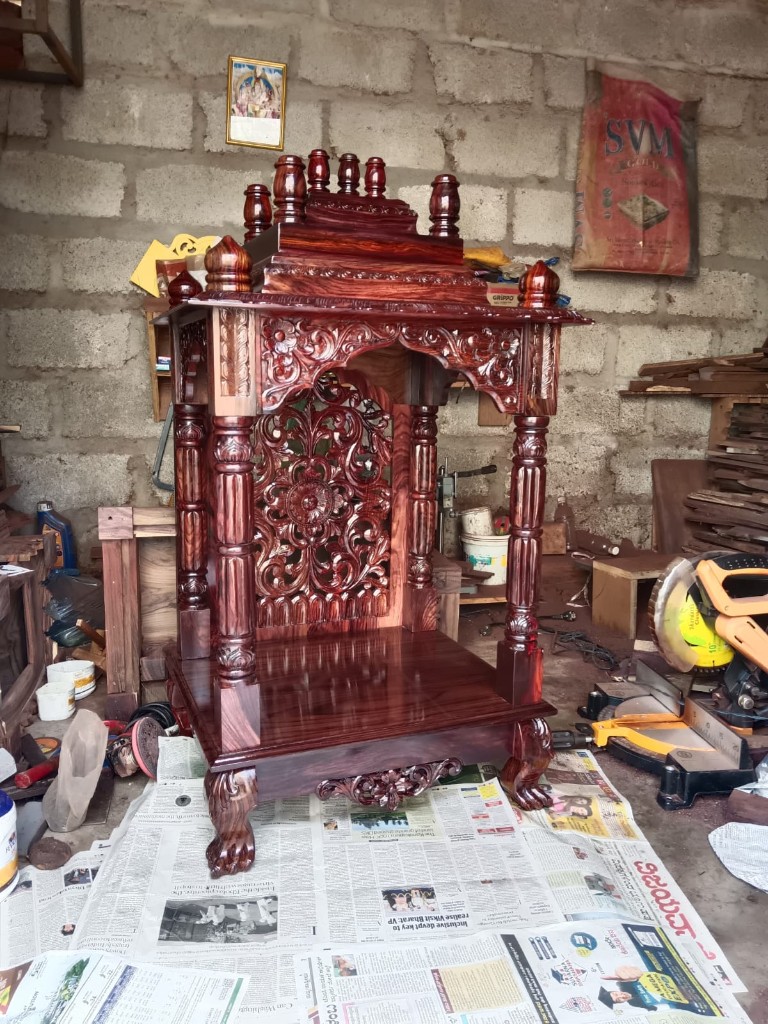
The principal wood is Indian rosewood. It is dense, and the grain runs in dark ribbons. A full polish brings that figure out: burgundy where the light hits, near-black in a dim corner. Teak is used when a lighter temple wood suits the room. Each plate on the site says which wood it is.
The hand
A piece begins as a drawing: width, height, deity, and whether the sanctum is open or closed. Pillars are turned. The crown is carved — finials, a rail, sometimes a kalasha. Jali is pierced through a door or a back panel. Inlay, where it is used, is cut and set into the face. Brass handles, bells, and a drawer in the plinth come last.
The usual finish is a deep gloss. A softer sheen can be discussed when the piece is drawn, before the polish begins.
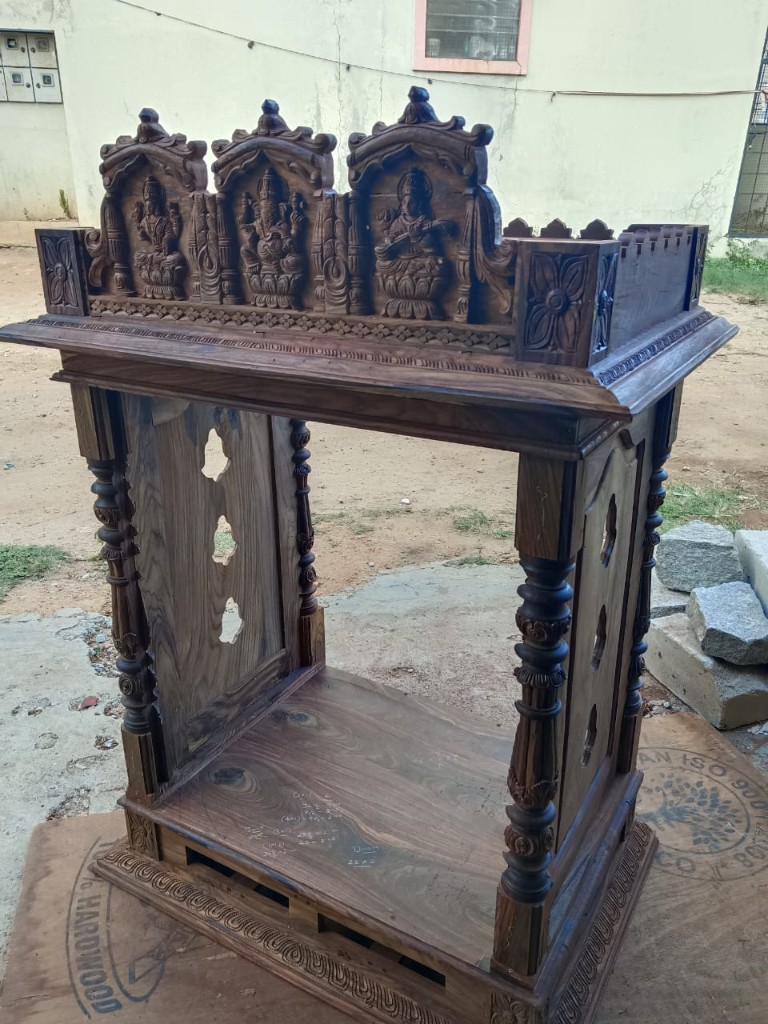
Every workshop photograph is gathered on one page, grouped by the piece it belongs to.
What you can ask for
An open pavilion. A locking cabinet. A low seat with an Om. A painted panel, as in the Shiva Parivar mantapa, or a carved crest of Lakshmi, Ganesha, and Saraswati. A shrine planned with the room itself, when the house can take it. Dimensions follow the wall you have.
Care
Dust with a soft cloth. Keep the piece off a wet floor and out of standing water. A lamp in the prayer room is part of its life. A leak above it is not. Wipe brass dry after worship.